The step by step guide to setting boundaries as a new mom without guilt: advice from a therapist mom
As a new mom, it can feel like your body just gave birth, but your boundaries disappeared.
Suddenly everyone has opinions. About your baby. Your body. Your schedule. Your decisions. People ask, advise, show up, message constantly, and expect access, often without noticing how vulnerable you actually are.
You may want support, not intrusion. Connection, not constant availability. And still, saying no feels heavy. Charged. Like you are doing something wrong.
For many mamas, especially those raised in collectivist, first-gen, or caretaking cultures, boundaries were never modeled as protection. They were framed as selfish, rude, or unnecessary. You learned to be grateful, accommodating, and strong, not to protect your energy.
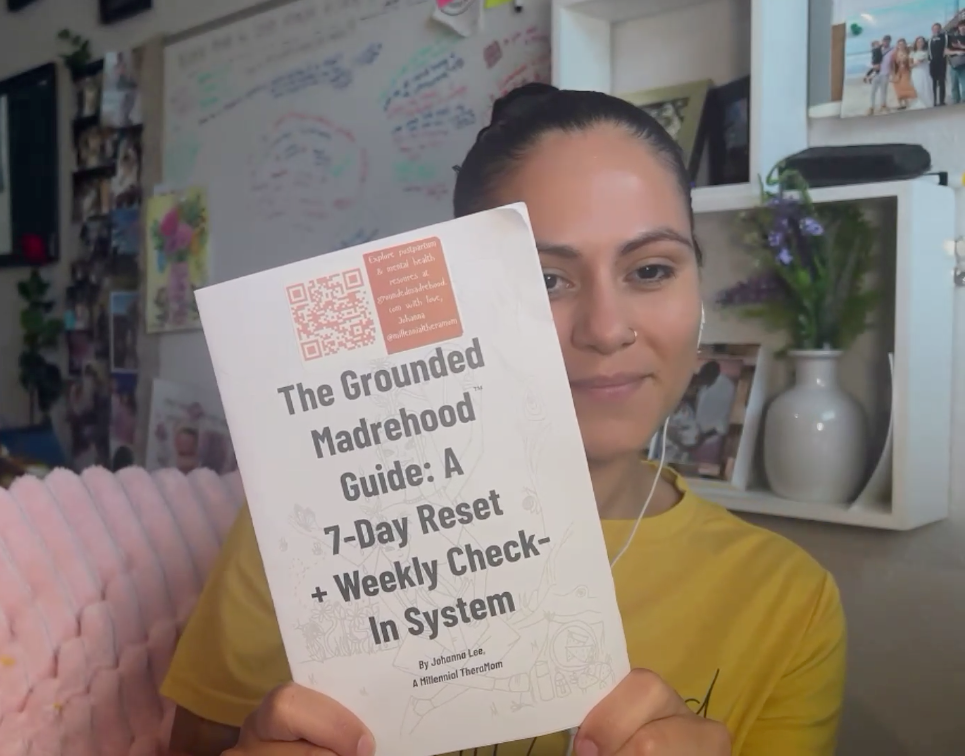
Hi, I’m Johanna Lee. I’m a licensed therapist and the founder of Millennial Theramom. I support mamas navigating boundaries, postpartum overwhelm, and nervous system overload through the mama community in California. My work is about helping you stay connected to yourself while becoming who you are now.
How to set boundaries as a first-time mom in real life
Setting boundaries as a first time mom does not start with perfect wording. It starts with deciding what your body and nervous system actually need right now.
In early motherhood, boundaries are less about negotiation and more about protection. Your capacity is limited. Your recovery matters. Clarity is kinder than over explaining.
Start with one non-negotiable boundary
Do not try to fix everything at once.
Choose one boundary that would make the biggest difference for your well being right now. For example:
- Limiting visits during the week
- Not responding to messages immediately
- Saying no to advice about feeding or sleep
One clear boundary held consistently does more than ten loosely stated ones.
Use simple, repeatable language
You do not need new explanations every time.
Examples you can reuse:
- We are not having visitors right now.
- We will let you know when we are ready.
- This is what works for us at the moment.
Boundaries work because they are predictable, not persuasive.
How to set boundaries when you have a newborn and everything feels urgent
When you have a newborn, boundaries are not about preference. They are about regulation.
Your body is healing. Your nervous system is sensitive. Your baby is learning safety through you. This is not the season for long conversations or emotional labor.
Newborn boundaries work best when they are short, clear, and timed around your capacity, not other people’s expectations.
Prioritize boundaries around rest and access
Ask yourself:
What interrupts my rest the most right now?
What leaves me feeling more depleted after?
That is where your boundary goes.
Common newborn boundaries include:
- Limiting how long visits last
- Asking people to text before coming over
- Saying no to hosting or entertaining
- Protecting feeding and sleep routines
You are allowed to design your postpartum around recovery, not politeness. You can learn more strategies here:
Mindful Boundaries in Postpartum & New Motherhood

You do not owe availability just because you are home
Being home with a newborn does not mean you are available.
You can be physically present and still unavailable for conversation, visitors, or decision making. This is not rude. It is realistic.
How to set boundaries with parents and family without breaking yourself
Setting boundaries with parents and family often feels heavier because history lives there.
Old roles resurface. Expectations come back. You may feel like you are twelve again instead of a grown woman caring for her own child.
You can honor your family and still choose differently. Boundaries do not erase love. They redefine how closeness works in this new chapter.
Why guilt shows up so strongly when you set boundaries with family
Guilt is not a signal that your boundary is wrong. It is often a sign that you are doing something unfamiliar in a system that benefited from your silence.
Many mamas carry generational messages that good daughters endure and good mothers sacrifice. When you interrupt that pattern, guilt appears.
Guilt is learned. It is not evidence.
Name the boundary, not the backstory
You do not need them to understand in order for the boundary to be valid.
Instead of explaining everything you feel, state what is happening now:
- We are not receiving visitors this week.
- We are making decisions based on what helps me recover.
- This is what we are doing right now.
Clarity reduces conflict more than justification.
Simple boundary tools that help when your brain is fried
When you are tired, emotional, or activated, insight is not enough. Tools help.
What is the 5 5 5 rule for new moms
Before saying yes, pause and ask:
- Will this matter in 5 minutes?
- Will this matter in 5 days?
- Will this matter in 5 weeks?
If the answer is no across the board, it does not need your immediate energy.
This rule helps you respond instead of react from guilt or pressure.
What are the 3 C’s of boundaries
Effective boundaries usually include three things:
Clarity
Consistency
Compassion
Clear boundaries are easier to respect.
Consistent boundaries feel safer over time.
Compassion means you include yourself, not just others.
You can be kind and firm at the same time.
Why boundaries are a mental health tool, not a personality trait
Boundaries are not about being assertive enough. They are about nervous system health.
When boundaries are missing, anxiety increases. Resentment builds. Your body stays in a state of alert because it never knows when it will be overwhelmed again.
Boundaries give your nervous system something to lean on.
How boundaries reduce anxiety and resentment over time
What you do not say lives in your body.
Over time, unspoken limits turn into irritability, shutdown, or emotional distance. Boundaries create predictability. Predictability creates safety. Safety allows your system to rest.
This is how boundaries support mental health.
When setting boundaries feels impossible, you are not meant to do it alone
If boundaries feel heavy or confusing, it does not mean you are bad at them. It often means you are trying to learn them while exhausted and unsupported.
Support through the mama community in California offers space to practice boundaries with guidance instead of guilt. You do not have to figure this out by trial and error alone.
Boundaries are not about becoming harder.
They are about staying intact while you care for your baby.

Hi, I'm Johanna Lee
A licensed therapist (LPCC), mental health educator & speaker who helps first-gen, Latina, women of color & new mamas feel seen, supported, and grounded in postpartum and beyond.