You are exhausted, but you cannot point to a single reason why.
Nothing dramatic has happened. There is no clear breaking point. You are still showing up. Meals get made. Responsibilities move forward. From the outside, you look capable and functional.
That is exactly why mom burnout is so hard to name.
Burnout does not arrive loudly. It builds quietly through constant responsibility, emotional availability, and mental load that never truly shuts off. Because you keep functioning, no one assumes something is wrong. Often, neither do you.
You tell yourself this is just motherhood. That you should be able to handle it. That everyone feels like this.
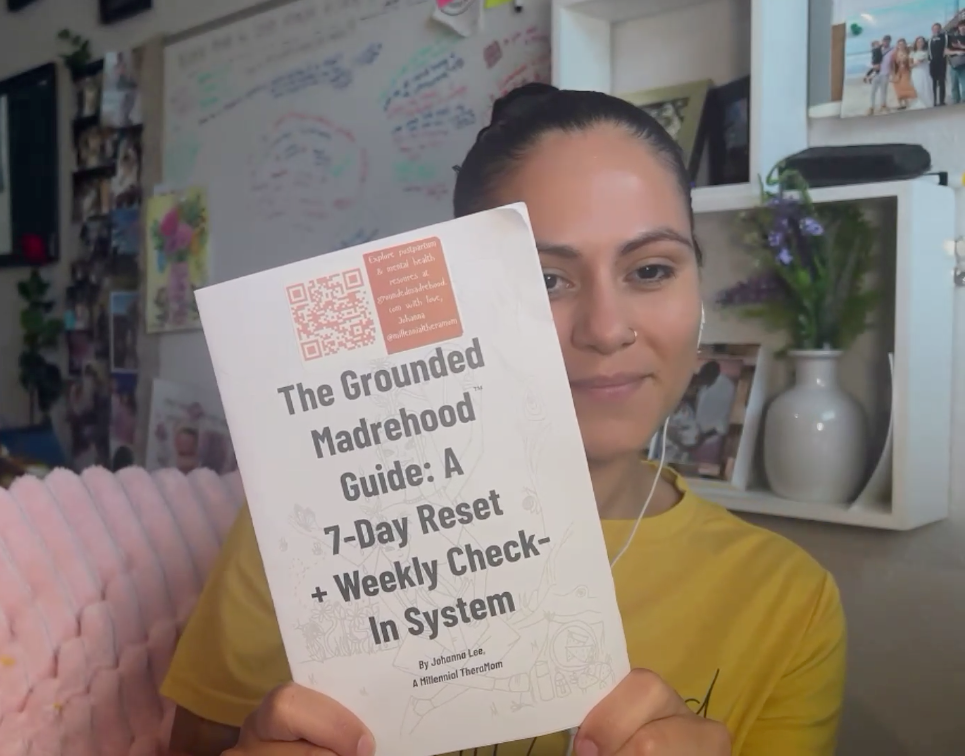
Hi, I am Johanna Lee. I am a licensed therapist, mental health educator, and speaker, and the founder of Millennial Theramom. I support mothers navigating mom burnout, emotional depletion, and relational
strain through themama community in California. My work centers on helping mothers understand what their nervous system has been carrying and how to restore capacity without guilt or self blame.
What is mom burnout, and why is it often misunderstood
Mom burnout is not about having a bad week. It is not simply feeling overwhelmed or needing a break.
Mom burnout is a state of chronic depletion resulting from sustained emotional, cognitive, and physical demands without sufficient recovery. It develops when caregiving responsibilities remain high while rest, support, and personal resources remain low.
Psychological research increasingly recognizes this pattern.
The American Psychological Association (APA) describes parental burnout as a state of overwhelming exhaustion related to the parenting role that develops when demands consistently exceed available resources over time. Because it overlaps with what society considers normal parenting stress, it often goes unnoticed and unnamed.
The APA highlights that parental burnout is not about temporary stress or poor coping. It reflects a chronic imbalance between responsibility and support, where recovery never fully happens.
How mom burnout shows up in daily life
Mom burnout is less a single symptom and more a pattern.
You may wake up tired even after a good night's sleep. Small tasks feel heavier than they used to. Decisions take more effort. Your internal margin feels thinner.
Research on parental burnout emphasizes that this exhaustion goes beyond typical stress. It reflects a chronic imbalance between demands and resources that does not resolve with short-term rest alone.
Emotional and mental signs of mom burnout
Emotionally, mom burnout often looks like numbness rather than sadness. Irritability replaces patience. Joy feels muted.
Mentally, the mind rarely rests. Thoughts loop. You plan, anticipate, and manage constantly. Even during downtime, your brain stays alert.
Physical and relational signals of burnout
Physically, burnout can feel like persistent tension, shallow breathing, or heaviness in the body even during rest.
Relationally, many mothers withdraw. Not because they do not care, but because they have nothing left to give. Connection begins to feel like another demand. Learn more here:
Parental Burnout 101: What is it & How you can address it as early as pregnancy!
Why mom burnout is often minimized or misunderstood by partners
Mom burnout is easy to miss if you do not know what to look for.
Partners often interpret burnout as stress, mood, or attitude because externally things appear stable. Tasks are still getting done. The household is still running.
What is not collapsing is often assumed to be fine.
Difference between stress and burnout
Stress is temporary. It spikes and resolves.
Burnout is cumulative. It reflects sustained load over time. When burnout is framed in stress terms, its depth and persistence are lost, which is why explanations often fall flat.
How to explain mom burnout to your husband in a way that actually lands
Explaining mom burnout effectively is less about listing symptoms and more about describing impact.
Rather than focusing on how tired you are, it helps to explain how burnout affects your capacity to think, feel, and function over time. Speak in patterns, not isolated moments.
Language that helps translate burnout into relational impact
Phrases that often land more clearly include:
- This is affecting how I think, feel, and function day to day.
- I am carrying more than I can sustainably manage.
- I am not asking you to fix this. I am asking you to understand it.
This framing shifts the conversation from comparison to comprehension.
What makes these conversations shut down
Conversations often end when exhaustion becomes evident. Trying to demonstrate how tired you are invites comparison rather than empathy.
Minimizing yourself before being heard also weakens the message. Burnout deserves to be taken seriously without apology.