First-time mom feeling overwhelmed? Tips and online mental health community resources for new moms
No one really prepares you for this part.
You expect to be tired. You expect sleep to be broken. What many first-time moms do not expect is the constant internal pressure. The feeling that your body never fully settles. That even when the baby sleeps, something in you stays alert.
This happens to many new moms because their nervous systems are carrying a level of responsibility they have never before experienced. Caring for a newborn requires sustained attention, emotional attunement, and decision-making with very little margin for rest.
That kind of responsibility changes how your body operates.
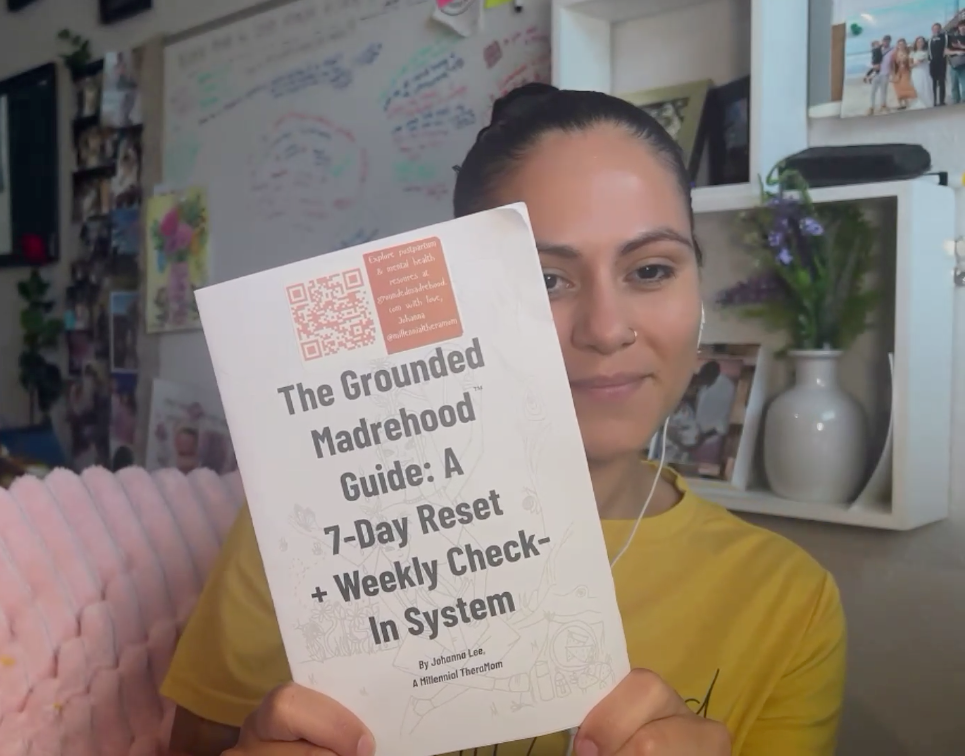
Hi, I’m Johanna Lee. I’m a licensed therapist and the founder of Millennial Theramom. I support first-time moms through the mama community in California.
Is it normal to feel overwhelmed with a newborn?
Yes. And it helps to understand why.
Newborn care places your body in a constant state of monitoring. Feeding cues. Breathing. Sleep cycles. Safety. Emotional regulation. Your nervous system tracks all of it, often without clear pauses.
When there is no predictable rhythm yet, your body stays prepared. Overwhelm develops when that level of monitoring continues without enough support, rest, or shared responsibility.
This is not about resilience. It is about load.
Why does overwhelm often start before you even have words for it?
Overwhelm rarely arrives as a clear thought.
It shows irritability that surprises you. Difficulty making simple decisions. Feeling behind even when you are doing everything. Rest that does not feel restorative.
Because many first-time moms are still functioning, this state often goes unnamed. You tell yourself this must be what early motherhood feels like.
By the time you question it, your system has already adapted to carrying too much.
How burnout feels as a first-time mom
Overwhelm is not just an emotional experience. It is a state of physiological saturation.
Your nervous system is processing constant responsibility, vigilance, and emotional labor with limited recovery. It remains active because it has not yet learned when relief will arrive.
This is why overwhelm can feel like:
- Your body never fully softens
- Your thoughts keep scanning even in quiet moments
- Silence feels unfamiliar instead of calming
- Small tasks require more effort than expected
These sensations reflect sustained load, not personal inadequacy.
Understanding the difference between new mom anxiety and overwhelm
Overwhelm and anxiety are related, but they are not the same.
Overwhelm is driven by volume. Too many demands are layered together without enough recovery.
Anxiety is driven by anticipation. The mind is trying to stay ahead of what might happen.
In early motherhood, overwhelm often comes first. When the load stays high long enough, worry can increase as the brain attempts to regain control.
Understanding this distinction helps shift the focus from fixing yourself to changing conditions.
Why does overwhelm feel heavier with your first baby?
With your first baby, nothing is automatic yet.
Every cry requires interpretation. Every decision carries weight. You are learning a new role while living inside it.
At the same time, your identity is reorganizing, your body is healing, and your sense of self is shifting. That layered transition adds cognitive and emotional demand that is often underestimated.
Feeling overwhelmed reflects the scale of the adjustment.
Why you can feel overwhelmed even when you are doing everything right
Overwhelm is not a measure of competence.
You can be attentive, loving, and organized, and still feel depleted. Much of what drains new moms happens internally. Mental tracking. Anticipating needs. Holding emotional space. Decision fatigue.
That invisible labor accumulates in the body even when it goes unseen.
Postpartum overwhelm and emotional sensitivity
When your nervous system is overloaded, emotional tolerance decreases.
You may feel down, flat, or emotionally fragile without a clear reason. Hormonal shifts postpartum, including changes around your cycle, can feel sharper when your system is already taxed.
These shifts reflect physiology interacting with load.


Signs your overwhelm is becoming burnout
Burnout does not happen all at once. It builds slowly, often disguised as “just being tired.” When you are in constant motion, your body adjusts to doing too much for too long. Over time, what started as temporary overwhelm can begin to feel like disconnection.
You might be moving through the motions of care without feeling fully present. You still love your baby, but it feels like your energy is running on fumes. Here are a few signs that your overwhelm is beginning to shift toward burnout:
- You feel detached or numb, even during moments that used to bring joy.
- You crave solitude, not because you dislike anyone, but because you are overstimulated by constant closeness.
- Rest does not help as much as it used to. You wake up tired.
- You find yourself snapping at loved ones or feeling guilty for needing space.
- You no longer feel like “yourself,” but you cannot explain what changed.
Strategies that help when motherhood feels like too much and how to deal with mom burnout
Insight alone does not reduce overwhelm. Practical changes do.
The goal is not to do more, but to reduce demand and support regulation.
Lower the expectations
If you are trying to be a perfect mom, pause.
Dinner does not need sides. Laundry does not need to be folded. Your child does not need an activity that requires supplies and emotional stamina.
Ask yourself:
What is the simplest version of this that still meets the need?
Choose that.
Lowering the bar conserves energy so your nervous system can recover.
Start your day with one grounding moment that belongs to you
Before the day pulls you in every direction, do one small thing that is just for you.
Nothing profound. Nothing optimized.
It might be drinking coffee in sunlight. Taking three slow breaths while brushing your teeth. Standing still for sixty seconds before waking your child.
This is not a self-care culture.
It is nervous system orientation.
Create a bare-minimum checklist for hard days
Some days are about survival, not growth.
Choose three non-negotiables:
- eat something nourishing
- take your medication if you have it
- brush your teeth
That is the list.
Everything beyond that is optional. Seeing proof that you showed up, even minimally, helps your system settle. I encourage you to try this and see how it works for you and your family.
Feeling Overwhelmed with New Parenthood? Let's Try Making the Load Visible (&delegate) | TheraMom
Ask for help without over-explaining
If you have access to support, use it. Be specific.
Try:
- Can you grab milk while you are out
- Can you take the baby for an hour so I can reset
- I just need someone to listen
You do not need to justify your need for support.
Make peace with the mess
Choose one small space that helps you breathe. That is your sanity zone. Let the rest be imperfect.
If structure helps, set a five-minute timer and clean until it ends. Then stop.
This applies to self-criticism too.
Create an emergency boredom basket
This is about decompression, not enrichment.
Keep simple activities that do not require you to entertain:
- coloring books
- audiobooks
- reusable sticker scenes
You are allowed to need breaks that do not involve teaching.
Drink water consistently
Hydration affects mood, energy, and focus.
Sometimes what feels like emotional spiraling is physical depletion. Keep water visible. Drink regularly.
Use screen time as a tool
Screen time is not a moral issue.
Used intentionally, it can support regulation, meal prep, or a brief reset. A regulated parent matters more than rigid rules.
Build connections instead of carrying everything alone
Isolation fuels overwhelm and burnout.
You do not need a perfect village. You need one or two places where honesty is allowed.
Connection does not need to be deep to be supportive. It needs to be real.
Where to find new mom mental health support
Therapy is not about fixing or pathologizing.
It offers space to slow down, understand what your body is responding to, and build regulation in a way that fits real life.
You can find support through the mama community in California where you will find strategies and tools that help reduce overwhelm by addressing both nervous system load and lived context.
Hi, I'm Johanna Lee
A licensed therapist (LPCC), mental health educator & speaker who helps first-gen, Latina, women of color & new mamas feel seen, supported, and grounded in postpartum and beyond.