
Postpartum Anxiety Symptoms, Causes, and Relief, From a Therapist Who’s Been There
Postpartum Anxiety Symptoms, Causes, and Relief, From a Therapist Who’s Been There
You love your baby deeply, yet your body never truly relaxes.
Even in quiet moments, your chest stays tight and your thoughts keep scanning for danger. There is a constant sense that something could go wrong, even when everything appears stable on the outside.
This is often how postpartum anxiety presents. Not as panic, but as sustained alertness. You may notice that your mind rarely slows down, that rest feels inaccessible, and that responsibility feels heavier than expected. Many mothers initially interpret this state as being attentive or careful, rather than as a clinical condition.
Postpartum anxiety frequently begins before it is named or recognized. Before a provider asks about it. Before you pause long enough to notice that something has shifted internally. For many women, especially those who learned early to manage stress, responsibility, or uncertainty without support, this pattern can feel familiar.
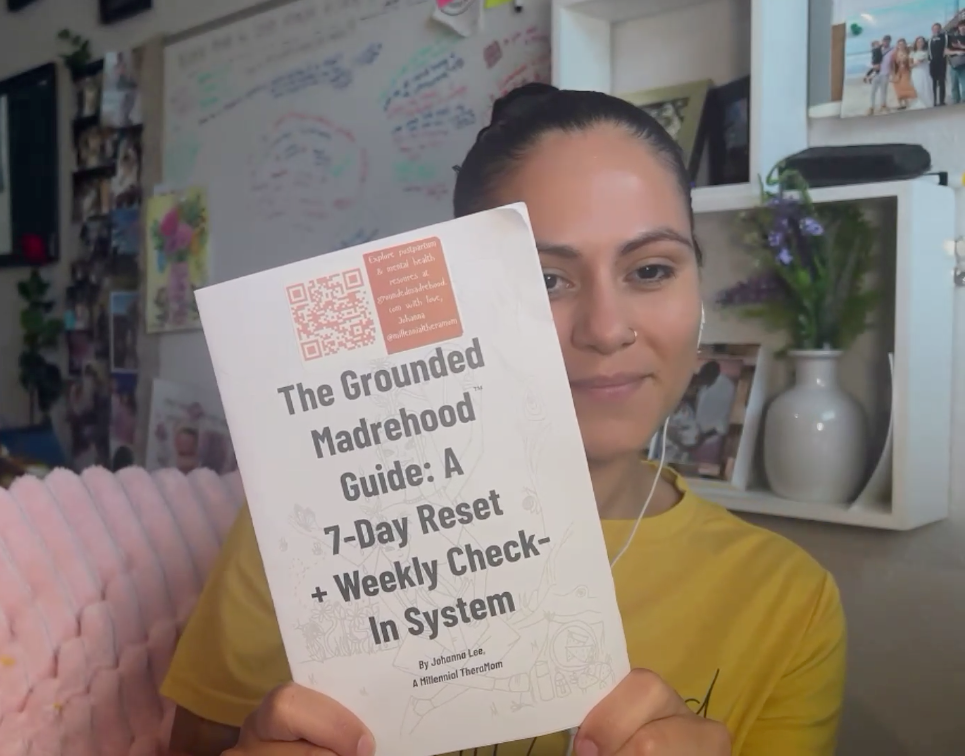
I’m Johanna Lee, a licensed therapist, mental health educator, and speaker. I work with first generation Latina women of color and new mamas navigating postpartum and the seasons that follow. I’m also the founder of Millennial Theramom, a business rooted in lived experience and the understanding that postpartum mental health for mujeres of color is a matter of equity and access.
Through postpartum therapy in San Diego, California, I support mothers who are adjusting to new parenthood while also carrying intergenerational stress, limited support, and high expectations. My work integrates clinical frameworks with culturally responsive care, including compassion-Focused therapy for anxiety, to address anxiety in a way that is practical, informed, and grounded. I also offer therapy for postpartum.
What follows is a clear, structured explanation of postpartum anxiety so you can understand what is happening in your body and make informed decisions about care.
What is postpartum anxiety?
Postpartum anxiety is a perinatal anxiety condition that can occur during pregnancy or after birth. It involves persistent worry, hypervigilance, and difficulty regulating fear, often without an identifiable immediate threat.
Clinically, postpartum anxiety reflects prolonged activation of the nervous system. This can affect sleep, appetite, digestion, breathing, concentration, emotional regulation, and overall functioning. Unlike situational stress, symptoms are persistent and often escalate rather than resolve with rest.
Postpartum anxiety is distinct from normal concern. It interferes with daily life and warrants clinical attention.
When postpartum anxiety starts
Postpartum anxiety can begin at different points. Some women notice symptoms during pregnancy. Others experience onset in the first weeks postpartum, while some develop anxiety months later as support decreases and demands increase.
Risk factors include a personal or family history of anxiety or depression, pregnancy complications or loss, trauma exposure, unplanned pregnancy, lack of social support, and chronic stress. For women who have lived in environments requiring constant vigilance, the postpartum period can intensify existing anxiety patterns.
How postpartum anxiety differs from postpartum depression
Postpartum anxiety and postpartum depression often show up together, but they are not the same. While depression tends to bring low energy, sadness, and disconnection, anxiety feels like being “on alert” all the time. You might notice racing thoughts, muscle tension, or a sense that something bad could happen if you stop paying attention for even a moment.
Many mothers experiencing postpartum anxiety say they feel wired but tired, exhausted, yet unable to relax. In contrast, postpartum depression often feels heavy, numbing, or marked by hopelessness. Both are real, valid, and treatable conditions that can overlap, but anxiety usually shows up through hypervigilance and overthinking rather than deep sadness.
Understanding this difference is important because it affects how you seek support. If your mind won’t stop scanning for danger or your body never fully rests, you may be dealing with postpartum anxiety, even if you don’t feel “depressed.” Naming it is the first step toward relief.

What postpartum anxiety looks like: signs and symptoms
Postpartum anxiety presents differently across individuals, but common patterns emerge. Many mothers report feeling constantly on edge, mentally overloaded, and unable to disengage from worry.
Common symptoms include:
- Persistent worry or anxiety most of the day
- Racing thoughts or difficulty sitting still
- Trouble sleeping even when the baby is sleeping
- Physical symptoms such as shortness of breath, chest tightness, stomach pain, headaches, or panic attacks
- Intrusive or repetitive thoughts about harm coming to oneself, the baby, or others
- Fear of being alone with the baby
- Difficulty concentrating or completing tasks
- Irritability or emotional reactivity
- Guilt or excessive self criticism related to parenting
These symptoms reflect nervous system dysregulation rather than lack of effort or coping.
The mental load that never shuts off
A core feature of postpartum anxiety is cognitive overactivation. Thoughts cycle rapidly, focusing on prevention, planning, and worst case scenarios. This mental activity is not voluntary and does not respond well to reassurance or logic alone.
The brain remains oriented toward threat detection, sustaining anxiety even in objectively safe situations.
How culture and early conditioning intensify symptoms
Postpartum anxiety is more prevalent and often more severe among women of colordue to cumulative stress exposure. Racism, medical bias, socioeconomic strain, and reduced access to care increase baseline anxiety levels.
Research shows that Latina, Black, and Indigenous women report higher stress and anxiety during pregnancy and postpartum, yet are less likely to receive timely diagnosis or treatment.
How common postpartum anxiety really is
Perinatal anxiety affects approximately one in five pregnant and postpartum people. Despite this prevalence, postpartum anxiety remains underrecognized and undertreated.
Many symptoms are normalized as part of motherhood or misattributed to personality, delaying appropriate intervention.
Learn more here:
https://www.youtube.com/watch?v=acMn7Z84Zqw
Is postpartum anxiety a clinical condition impacting functioning?
Postpartum anxiety can significantly impair daily functioning. It may affect the ability to work, rest, bond with the baby, maintain relationships, or complete routine tasks without distress.
From a clinical standpoint, postpartum anxiety warrants treatment when symptoms interfere with functioning. The focus is not labeling, but assessing impact and addressing it appropriately.
Why untreated postpartum anxiety matters
Untreated postpartum anxiety is associated with increased risk for:
- Hypertensive disorders of pregnancy
- Preterm birth and low birth weight
- Difficulty with infant bonding
- Lower rates of breastfeeding
- Postpartum depression
- Persistence of anxiety into later parenthood
These outcomes underscore the importance of early, informed intervention.
How long postpartum anxiety lasts and what actually changes it
Postpartum anxiety does not follow a universal timeline. Its duration depends less on time itself and more on whether the factors sustaining anxiety are addressed.
For some mothers, symptoms ease within months when anxiety is identified early and support is in place. For others, anxiety persists well beyond the first postpartum year, not because it is inherently severe, but because the nervous system remains under continuous strain.
What determines how long postpartum anxiety lasts is not insight or effort. It is whether the conditions keeping the nervous system activated are reduced. These conditions often include chronic sleep deprivation, ongoing stress, lack of practical support, unresolved trauma, and the absence of consistent regulation support.

Can postpartum anxiety last for years?
Yes. Postpartum anxiety can become long term when it is minimized or left untreated. In these cases, anxiety generalizes beyond the baby into work, relationships, health, and daily decision making.
Over time, constant hypervigilance becomes the baseline state rather than an acute response. This reflects ongoing nervous system activation rather than a lack of coping.
When does postpartum anxiety begin to go away?
Postpartum anxiety begins to decrease when the nervous system experiences sustained, predictable safety. This does not occur through reassurance alone, but through changes that reduce physiological load and support regulation.
Improvement often begins when one or more of the following are present:
- Protected and restorative sleep
- Reduced cognitive and emotional overload
- Targeted therapeutic support
- Medication when symptoms are moderate to severe and clinically indicated
- Reliable relational support that allows co regulation
Progress is not defined by the absence of anxiety. Clinically, improvement looks like reduced symptom intensity, shorter anxiety cycles, improved sleep and focus, and increased capacity to respond rather than react.
How to overcome this
Effective treatment for postpartum anxiety is typically multimodal and tailored to symptom severity and individual context.
Psychotherapy
Psychotherapy is first line treatment for mild to moderate postpartum anxiety. Evidence based approaches include cognitive behavioral therapy, interpersonal therapy, acceptance and commitment therapy, and compassion focused approaches.
In compassion-Focused therapy for anxiety, treatment focuses on reducing shame, improving emotional regulation, and building a sustainable internal response to stress.
Medication
For moderate to severe anxiety, medication may be recommended. Although no psychiatric medication is specifically FDA approved for pregnancy or lactation, many are prescribed based on careful risk benefit analysis.
Medication decisions should be made collaboratively with providers experienced in perinatal mental health.
Complementary supports
Sleep protection, physical activity, gentle movement, relaxation practices, and body based interventions can support recovery. These approaches are adjunctive and most effective when combined with clinical treatment.
Why regulation comes before insight
Cognitive understanding alone does not resolve anxiety. Nervous system regulation is a prerequisite for sustained change.
Interventions that support physiological regulation improve responsiveness to therapy and overall functioning.
When to seek therapy for postpartum anxiety
If your anxiety is keeping you from resting, bonding with your baby, or feeling like yourself, it’s time to reach out for support.
Some signs that therapy could help include:
- Your mind feels stuck in “what if” loops even when things are calm.
- You can’t fall asleep even when you’re exhausted.
- You feel guilty, irritable, or emotionally flooded most of the day.
- You avoid being alone with your baby out of fear something could go wrong.
A therapist trained in postpartum and perinatal mental health can help you learn practical grounding techniques, challenge anxious thought patterns, and create space for rest. In California, and especially in San Diego, you can find culturally responsive therapists who understand how identity, family expectations, and motherhood intersect. You don’t have to navigate this alone.
You deserve access to informed and appropriate care
Postpartum anxiety is common, clinically significant, and treatable. It affects functioning, health, and quality of life.
Seeking care is a practical response to a condition with measurable impact and effective treatment options.
Working with
a
San Diego therapist can support symptom reduction, improved regulation, and greater stability during postpartum and beyond.

Hi, I'm Johanna Lee
A licensed therapist (LPCC), mental health educator & speaker who helps first-gen, Latina, women of color & new mamas feel seen, supported, and grounded in postpartum and beyond.


The step by step guide to setting boundaries as a new mom without guilt: advice from a therapist mom