
Postpartum rage: the emotion nobody warned you about

September 15, 2026

Nobody sat you down before the baby came and told you about this part. They told you about the sleepless nights, the diapers, maybe even the baby blues. But nobody warned you that one day you would feel a heat rise in your chest so fast and so hot that it would scare you. That you would snap at your partner over something small, slam a cabinet door, or want to scream into a pillow because your body could not hold what it was feeling. If this sounds familiar, mama, you are not broken. You are experiencing postpartum rage, and it is far more common than the silence around it suggests.

In case you are new here, I am Johanna Lee, a therapist for postpartum mental health helping first generation, Latina, and mamas of color navigate the parts of madrehood that feel too heavy or too shameful to say out loud. I built this space because I know what it is to grow up being the strong one and then become a mother while carrying that same pressure. You deserve a therapist who understands the rage, the guilt, and everything underneath it.

What postpartum rage feels like in your body

Postpartum rage does not usually feel like ordinary frustration. It feels like your body goes from calm to combustion in seconds. Your chest gets tight, your face flushes, your hands might shake. You might yell, throw something, or feel the urge to slam a door just to release the pressure building inside you. And then, almost immediately after, the shame arrives. You wonder how you could feel that way toward the people you love most.

Some mamas describe the buildup as a slow simmer that finally boils over by the end of the day. Others describe it as sudden, with no warning at all, like a switch flipping from calm to furious in a breath. Both patterns are real, and both are exhausting in their own way, because you are left either bracing for the boil or blindsided by the switch, never quite trusting your own emotional weather.

This cycle, the buildup, the explosion, and the crushing guilt afterward, is one of the most common patterns mamas describe when they finally say the words out loud in session. You are not a bad mother for feeling this. You are a mother whose nervous system is overloaded, under supported, and running on empty.

What makes this so disorienting is how quickly it can happen. One moment you are folding laundry, the next you are gripping the counter trying not to yell at your toddler for spilling water, and you cannot fully explain the gap between the small trigger and the enormous internal reaction. Many mamas tell me they feel like a different person during these moments, someone who is not really them, and that disconnect is exactly why postpartum rage feels so frightening. It is not that you have suddenly become someone cruel. It is that your capacity to regulate has been stretched past what your body can sustainably hold.

Postpartum rage also has a way of showing up toward the people you love most, which makes the guilt even sharper. You might notice the anger lands most often on your partner, on your own mother, or even quietly toward your baby in a way that terrifies you to admit. This is common, and it does not mean you are dangerous. Rage tends to aim itself at whoever is closest, whoever feels safest to let your guard down around, which is often the very people carrying you through this season.

Why the rage shows up when nobody warned you

Postpartum rage rarely comes from nowhere. It builds from a combination of things happening in your body and your life all at once, and understanding the why is often the first step toward feeling less crazy and more human.

The hormone crash nobody explains

After birth, your estrogen and progesterone drop fast, and that shift alone can leave your nervous system raw and reactive. Add in the sleep deprivation that comes with caring for a newborn, and your brain simply does not have the reserves to regulate big emotions the way it used to. This is not a personality flaw. It is biology colliding with circumstance.

The invisible labor that fuels the fire

For so many of the mujeres I work with, the rage is not only hormonal. It is the accumulation of being the one who remembers everything, who anticipates everyone's needs, who carries the mental load of the household while also being told to smile through it. When you were raised to be the strong one, to be calladita, to never let anyone see you struggle, that pressure does not disappear when you become a mother. It compounds.

Sensory overload and touched out nervous systems

Constant touching, constant noise, constant need. Your body can only absorb so much before it starts sending distress signals in the form of irritability and anger. This is your nervous system asking for a break, not evidence that something is wrong with you as a mother.

Grief hiding underneath the anger

So often what looks like rage is grief with nowhere to go, grief for the body you had before, the freedom you had before, the version of yourself that existed before every hour of your day belonged to someone else. Grief that has not been acknowledged tends to convert into anger, because anger feels more useful, more active, than sitting with loss. When we make space in therapy to grieve what motherhood has genuinely cost you, without guilt attached, the rage often starts to lose some of its charge.

When rage stops being occasional and starts feeling like your baseline

There is a difference between the flash of heat that shows up on a hard day and a low simmer that never fully turns off. If you notice you are irritable before your feet even hit the floor in the morning, or that patience feels like a resource you ran out of weeks ago, the rage may be less about any single trigger and more about a deeper depletion. This is often where postpartum rage and mom burnout overlap. If that sounds familiar, I also write more directly about that overlap in Mom Burnout: How to Explain it and build your support system offline and online, because sometimes anger is your body's loudest way of telling you the load has gotten too heavy to carry quietly.

postpartum rage

How therapy helps you meet the rage without shame

Healing from postpartum rage is not about suppressing anger until it disappears. It is about understanding what your body is trying to tell you and building tools to respond instead of explode. In our work together, we often draw on cognitive behavioral therapy for postpartum mental health to help you notice the buildup before it reaches a breaking point, so you have a moment to choose a different response.

We also make space for the deeper layers underneath the rage, the exhaustion nobody validated, the cultural expectations you never agreed to but inherited anyway, and the grief of losing pieces of yourself in this transition. Rage almost always has something underneath it wanting to be heard. When we slow down enough to listen, mujeres often find that the anger softens because it finally has somewhere to go.

You also learn practical tools for the moment the heat starts rising, ways to step away safely, breathe through the wave, and repair with your familia afterward without drowning in guilt. Some of these are the same small, doable grounding practices I share in Mindfulness for New Moms: Daily Tools to Ease Anxiety and Find Balance, things like noticing your feet on the floor or naming one physical sensation before you respond, because these tiny pauses are often what create the gap between the trigger and the explosion. Healing is not about becoming a mother who never feels anger. It is about becoming a mother who knows what to do when the anger comes.

Part of this work also means looking honestly at your support system. So many mamas carrying rage are also carrying far more than their share of the household, the scheduling, the emotional care of everyone around them. If you are the only one absorbing all of that weight, rage will keep returning no matter how many coping tools you learn, because the underlying imbalance has not shifted. We talk openly about what asking for real support could look like, even when that conversation feels uncomfortable or unfamiliar in your family.

We also work on repair, because rage without a path back to connection leaves shame to fester in the silence. Learning how to come back to your child or your partner after a hard moment, to name what happened without over apologizing or spiraling into self punishment, teaches your body that mistakes do not have to end in isolation. This is often where the deepest healing happens, not in never feeling anger again, but in trusting that you can come back from it.

You do not have to earn softness, mama

If you are reading this at two in the morning wondering what is wrong with you, nothing is wrong with you. You are carrying a weight that was never meant to be carried alone, and the fact that you are looking for answers instead of staying silent is already an act of courage. What would it feel like to trust yourself again, even in the middle of this season?

Healing does not mean you will never feel frustrated again. It means the frustration will have somewhere safe to land instead of building until it explodes. It means you get your comadre energy back, the version of you that can laugh with your kids instead of bracing around them, the version of you that feels present instead of on edge. That mother is still in there, and she is not gone. She is just waiting for some of this weight to lift.

I help mamas across California move through postpartum rage and rebuild a relationship with themselves that feels steady instead of reactive. Whether you are navigating this in San Diego, Chula Vista, or from home in Bonita, you deserve support that speaks to your whole story, cultura and all.

If you are ready to stop carrying this alone, book your consultation today.

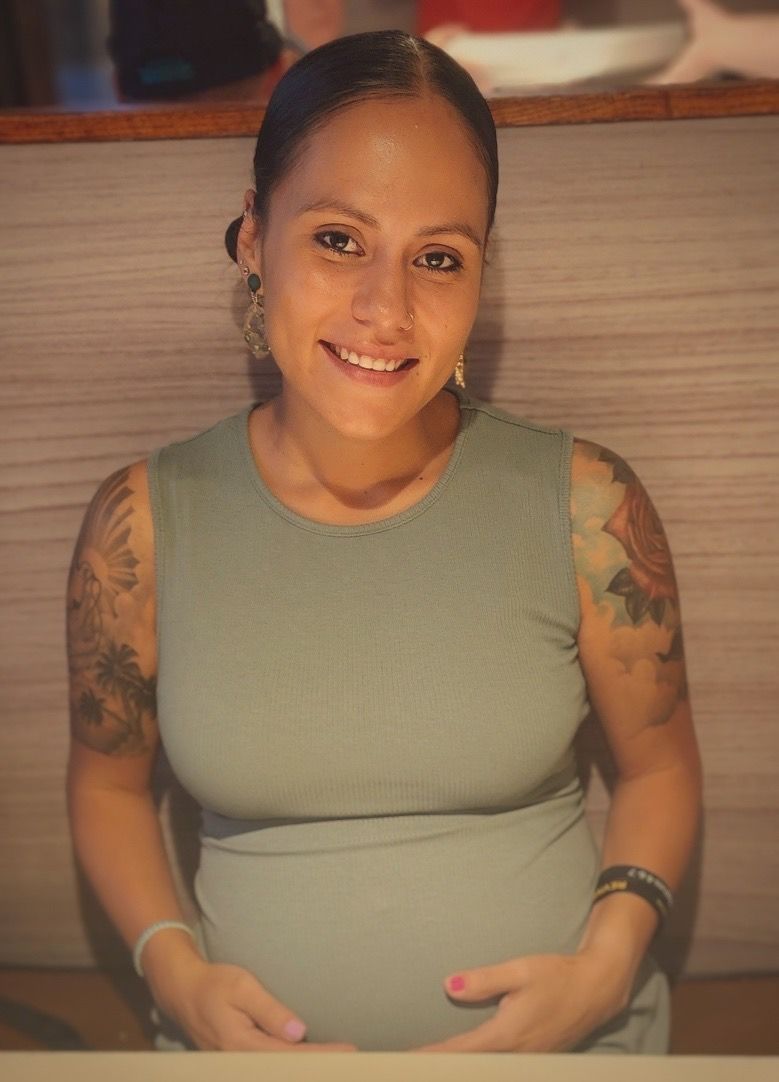
Smiling person in a green sleeveless top, seated indoors with tattooed arms and hands resting on a pregnant belly

Hi, I'm Johanna Lee

A licensed therapist (LPCC), mental health educator & speaker who helps first-gen, Latina, women of color & new mamas feel seen, supported, and grounded in postpartum and beyond.

postpartum blues
June 17, 2026
Feeling emotional after birth? Learn what postpartum blues really are, how long they last, and when to seek support. Culturally rooted care in San Diego.
Postpartum depression symptoms
June 4, 2026
Feeling lost after baby? Learn the real signs of postpartum depression and why Latina and WOC mamas often miss them. Culturally rooted support in San Diego.

setting boundaries as a new mom
By johanna Lee April 23, 2026
Setting boundaries as a new mom can feel overwhelming and guilt-filled. Learn how to set clear boundaries with family and protect your energy during the newborn stage.

Postpartum Mental Health
By johanna Lee April 9, 2026
Postpartum mental health can feel confusing and isolating. Learn how postpartum affects your emotions, what is normal, and when support can help you feel held and understood.

mom burnout
By johanna Lee March 26, 2026
Mom burnout explained clearly and in depth. Understand what maternal burnout is, how it shows up, why it is misunderstood, and how to communicate it without guilt.

First-time mom feeling overwhelmed
By johanna Lee March 12, 2026
First-time mom feeling overwhelmed? Learn why it happens, signs of burnout, and practical ways to regulate your nervous system and find support.